
Tag: Savarkar
-
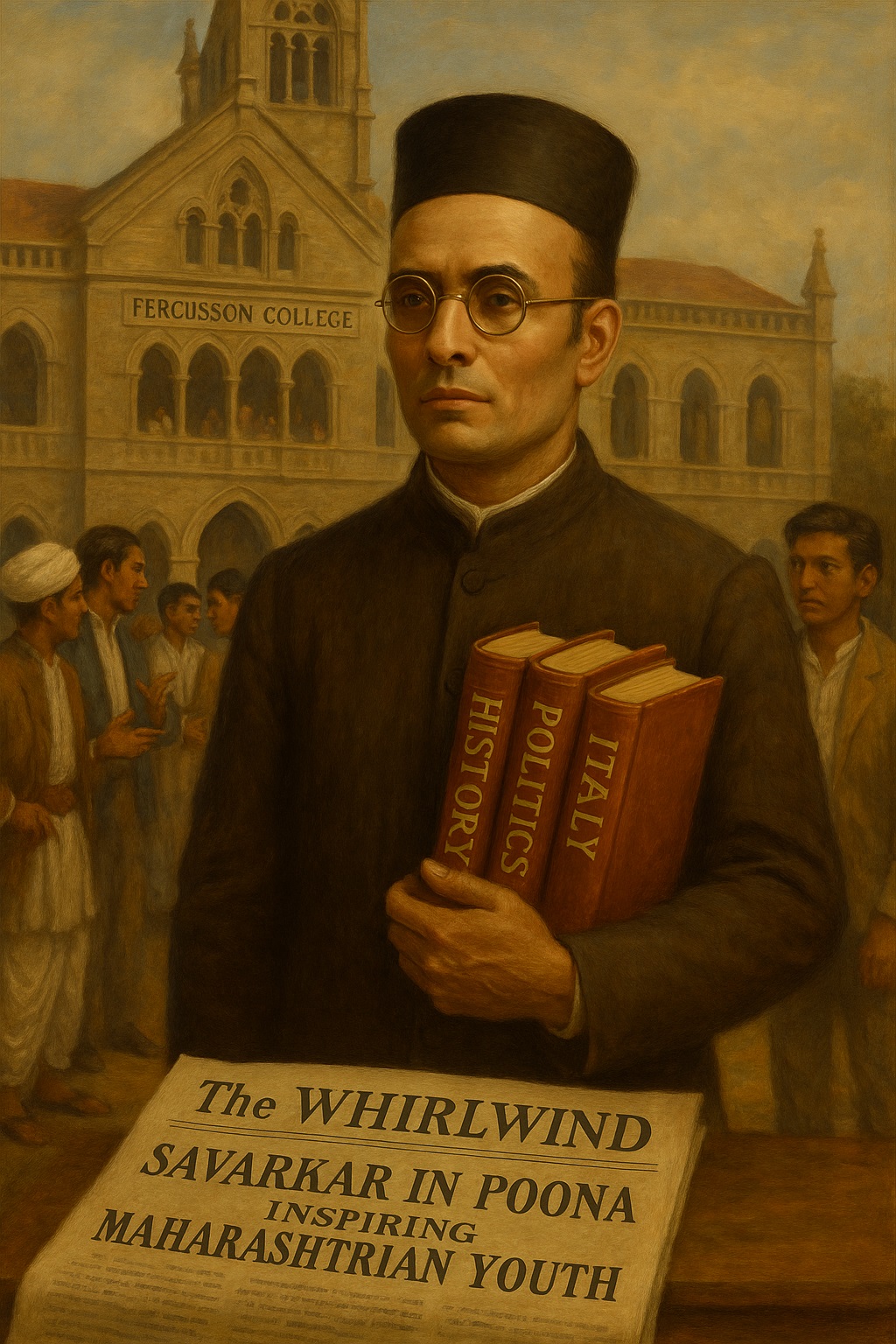
On 24 January 1902, Vinayak Damodar Savarkar enrolled at the prestigious Fergusson College in Poona, undertaking a major in the arts with the aim of securing a Bachelor of Arts (B.A.) degree. At the turn of the century, Fergusson College had become a vibrant hub of nationalist thought and reformist energy. It attracted some of…
-
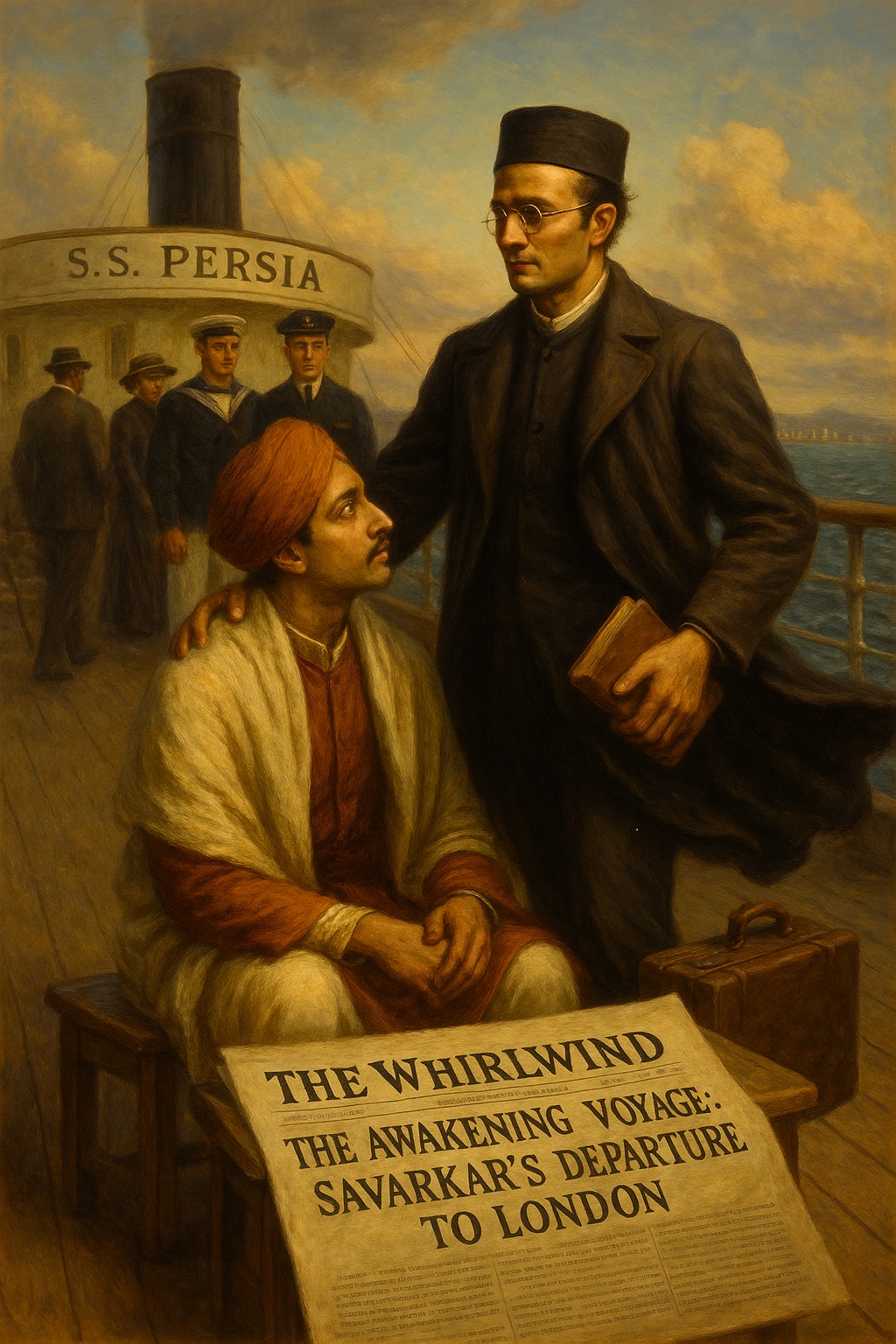
In June 1906, a young Vinayak Damodar Savarkar stepped aboard the S.S. Persia, setting sail for England. At first glance, it may have appeared to be a student’s voyage in pursuit of a legal education. But this journey would prove far more consequential—not just for Savarkar, but for the future of India’s freedom struggle. Funded…
-
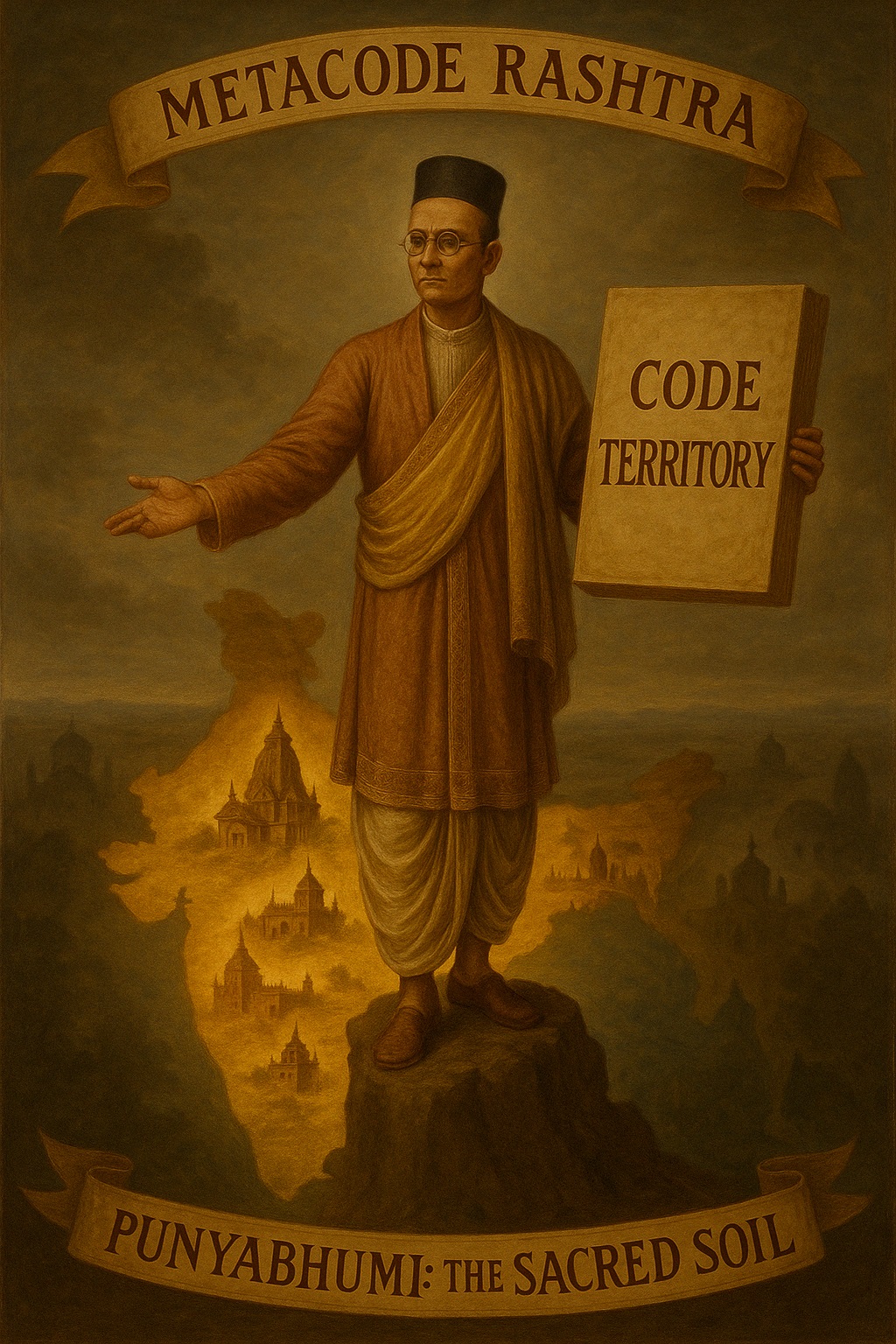
Savarkar’s coding of Hindutva; Metacode Rashtra, Part 4; Code Territory (3/6) The concept of Punyabhumi, or “sacred land”, is central to Vinayak Damodar Savarkar’s definition of the Hindu Rashtra. While he acknowledges the geographical and territorial aspect of the nation (Pitribhu), he further elevates it by embedding a religious dimension, defining it as a “sacred…
-

Savarkar’s Coding of Hindutva, Metacode Rashtra, Part 3; Code Territory (2/6) Vinayak Damodar Savarkar’s ideological framework for Hindutva is deeply rooted in territorial delineation, a concept that is essential for political realism while seemingly contradictory to his broader worldview. His reflections on the nature of the Indian nation and its territorial boundaries stem from a…
-
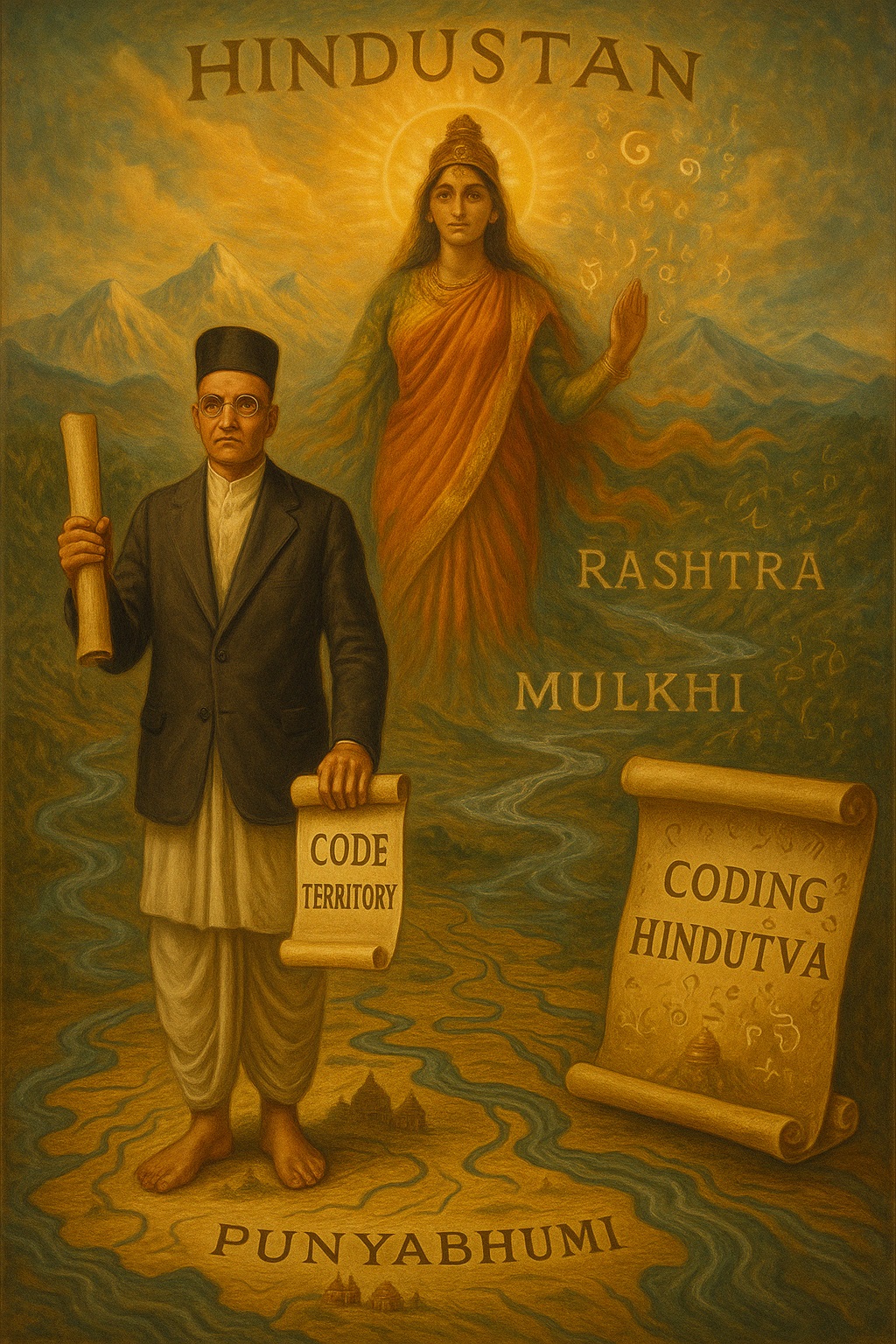
Savarkar’s Coding of Hindutva; Metacode Rashtra, Part 2 ; Code Territory (1/6) In the complex tapestry of Hindutva, the concept of Rashtra, the shared land, more specifically the Code Territory, plays a pivotal role. It’s more than just a map; it’s the foundation upon which the idea of a unified Hindu identity is built. To…
-
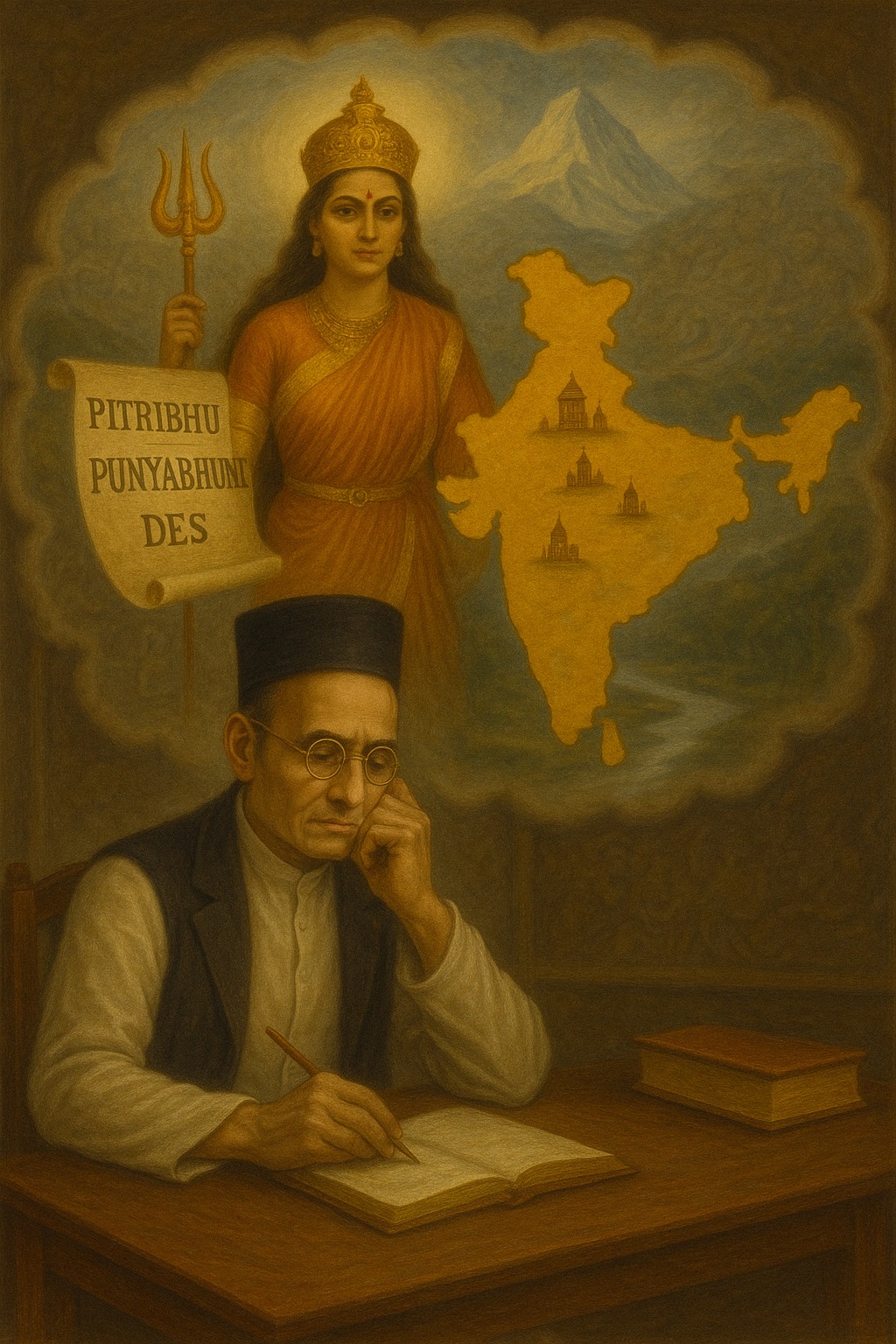
Savarkar’s Coding of Hindutva; Metacode Rashtra, Part 1 The concept of Hindutva is deeply intertwined with geography, history, and a unique cultural identity. At its core, the idea of Rashtra – the first Metacode – serves as the constitutive element of the “common land.” This Metacode not only defines the territorial framework of Hindutva but…
-
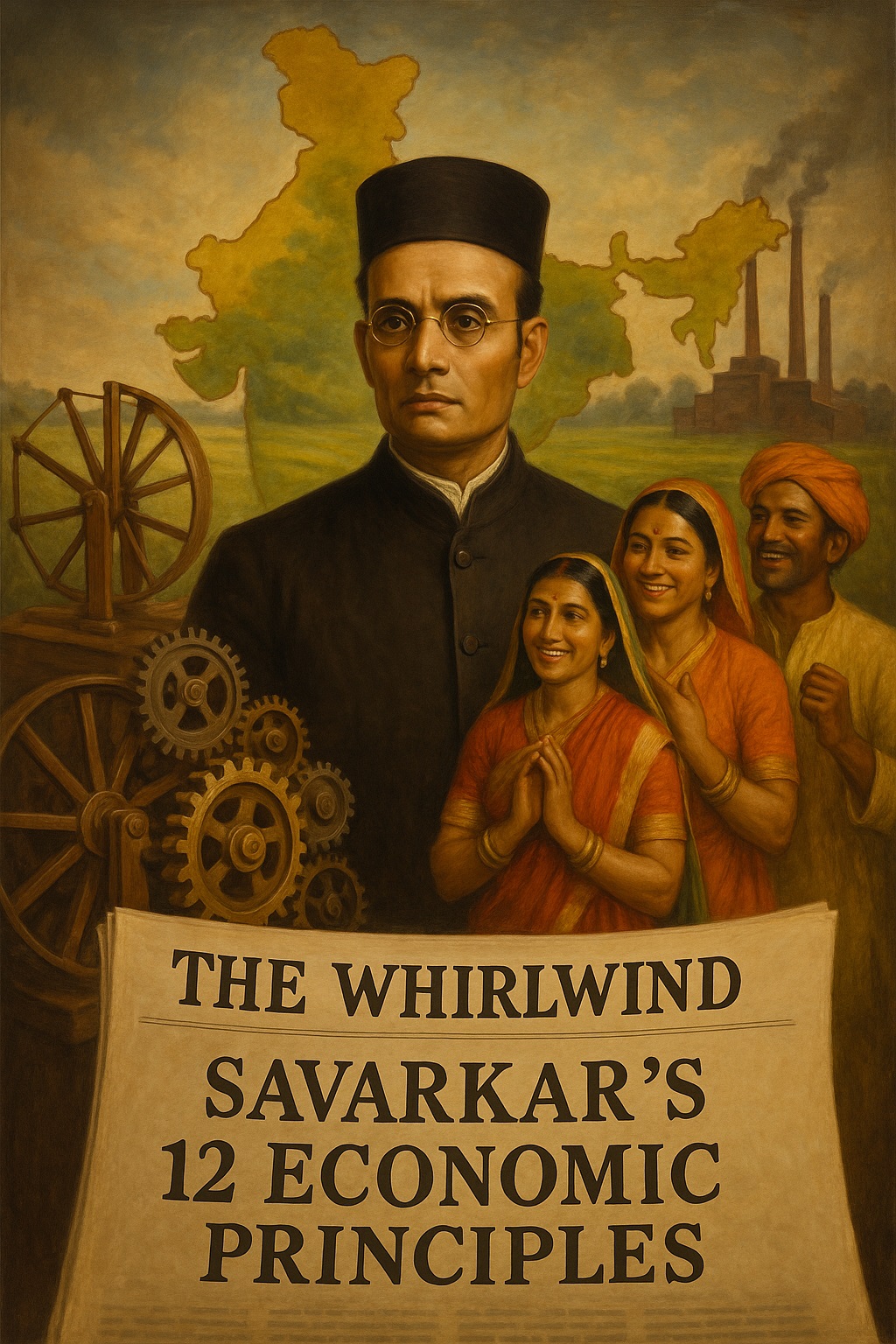
Economic Dimension of Hindutva, Part 5; Savarkar’s Economic Principles (1/13) The economic dimension of the Hindutva ideology is often overlooked in discussions dominated by its political and cultural aspects. However, the economic program articulated by Savarkar, particularly through his “12 Principles,” is crucial to understanding his vision for India’s future. These principles were presented during…
-
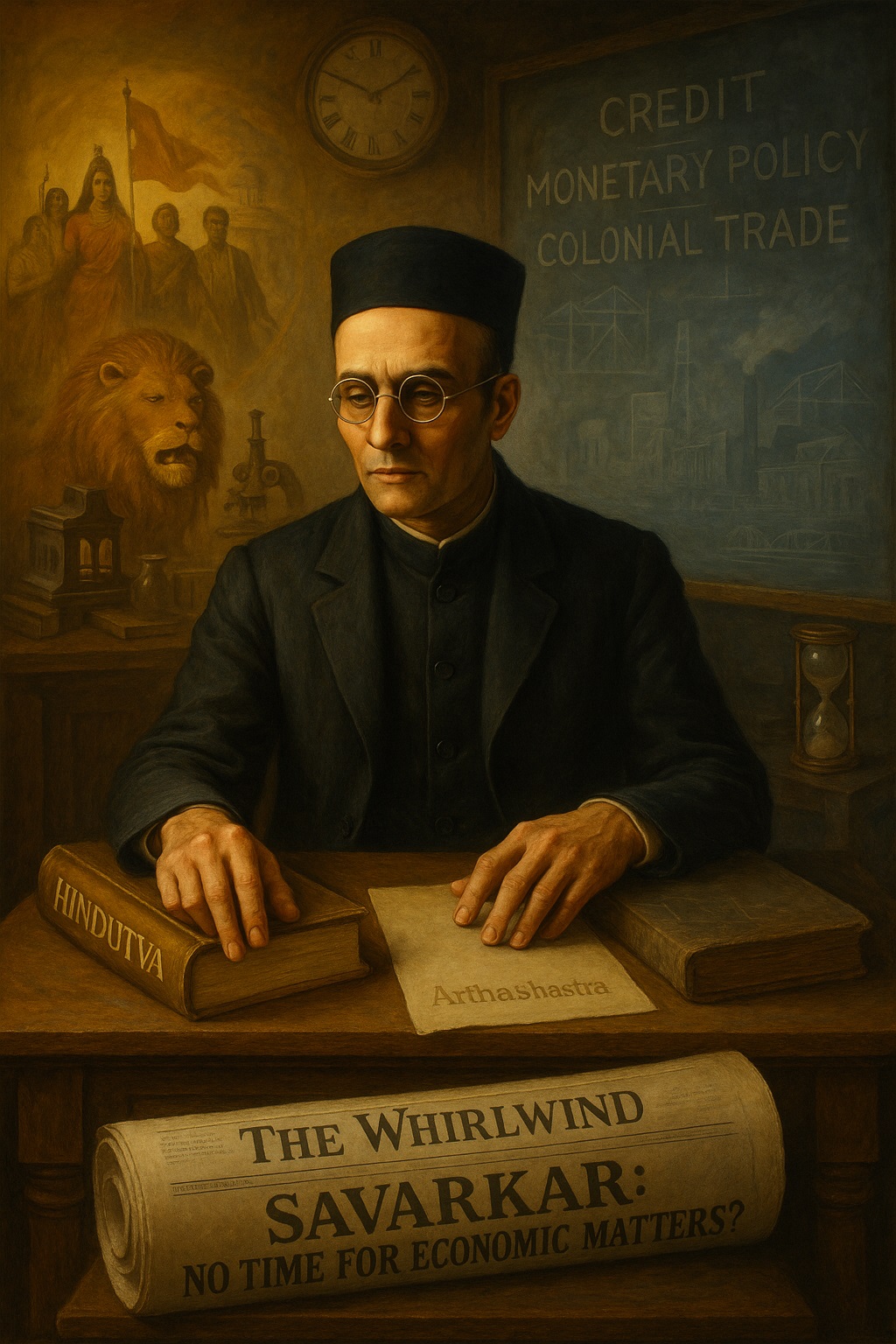
Economic Dimension of Hindutva, Part 4 Vinayak Damodar Savarkar is often remembered for his strong ideological stance on nationalism, Hindutva, and socio-political issues. However, when it comes to the realm of economic policy, his contributions and ideas have remained largely under-explored. This is perhaps surprising, given that Savarkar, in his vision for the Hindu Rashtra…
-
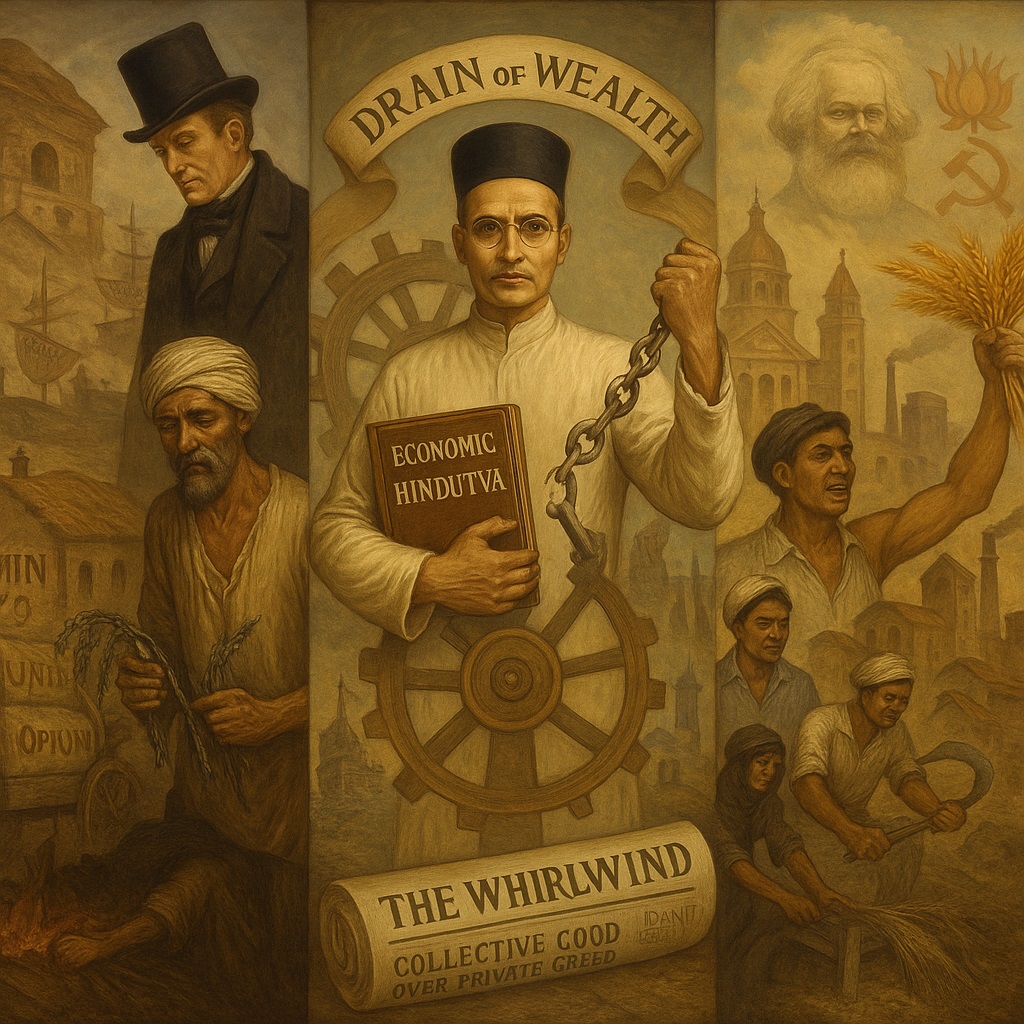
Economic Dimension of Hindutva, Part 3 The historical context of India’s colonial experience under British rule offers a complex narrative of economic distress, cultural shifts, and political movements. Among the Indian nationalists who fought against foreign domination, many turned to socialism as a potential solution to the severe economic challenges facing the nation. They believed…
-
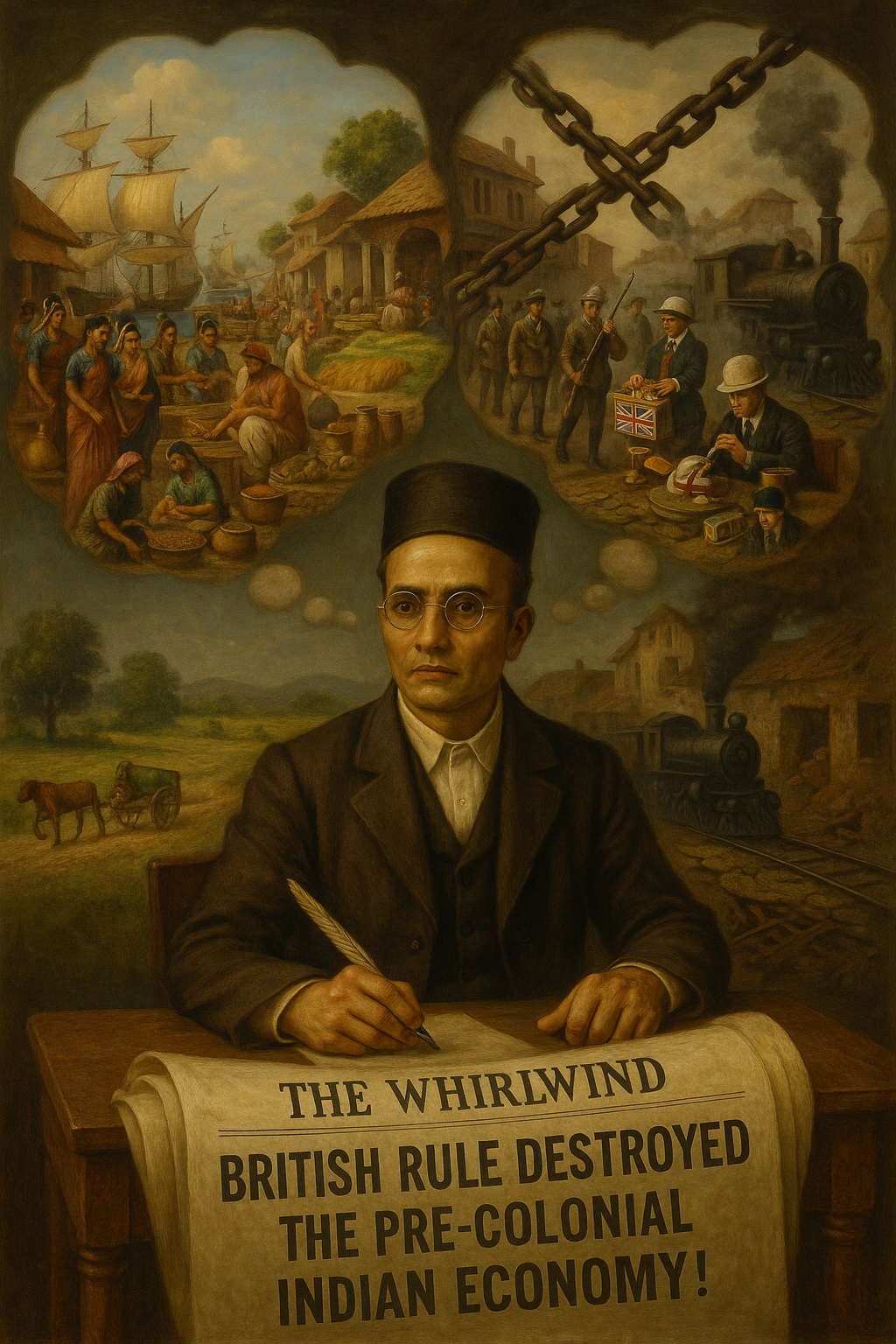
Economic Dimension of Hindutva, Part 2 The economic history of India under British colonial rule (British Raj) remains a subject of significant debate, especially when viewed through the lens of a nationalist perspective. Nationalists have long argued that British colonialism destroyed or severely deformed a flourishing pre-colonial Indian economy, which had been progressing smoothly before…