Category: Political Dimension
-

When Vinayak Damodar (Veer) Savarkar reflected on what holds a nation together, he looked beyond geography or race. For him, true national unity demanded not only shared ideals but also a shared language (a Rashtrabhasha) — a medium through which those ideals could live, circulate, and bind people together. Savarkar viewed communication as the ‘lifeblood…
-

Political Dimension of Hindutva, Part 13 Introduction – A Justification of “Relative Violence” Violence and non-violence have long been central themes in Indian philosophical and political thought. Vinayak Damodar (Veer) Savarkar, a key proponent of Hindutva, presented a unique discourse on the subject, arguing for a pragmatic approach to violence—what he termed “just, relative violence.”…
-

Political Dimension of Hindutva, Part 12 Introduction – Savarkar’s Radical Philosophy of Resistance Few statements in modern Indian political thought are as provocative as Vinayak Damodar (Veer) Savarkar’s declaration that relative non-violence is a virtue, absolute non-violence a crime. This concise yet explosive maxim captures the essence of Savarkar’s departure from the dominant ‘Gandhian ethos’…
-
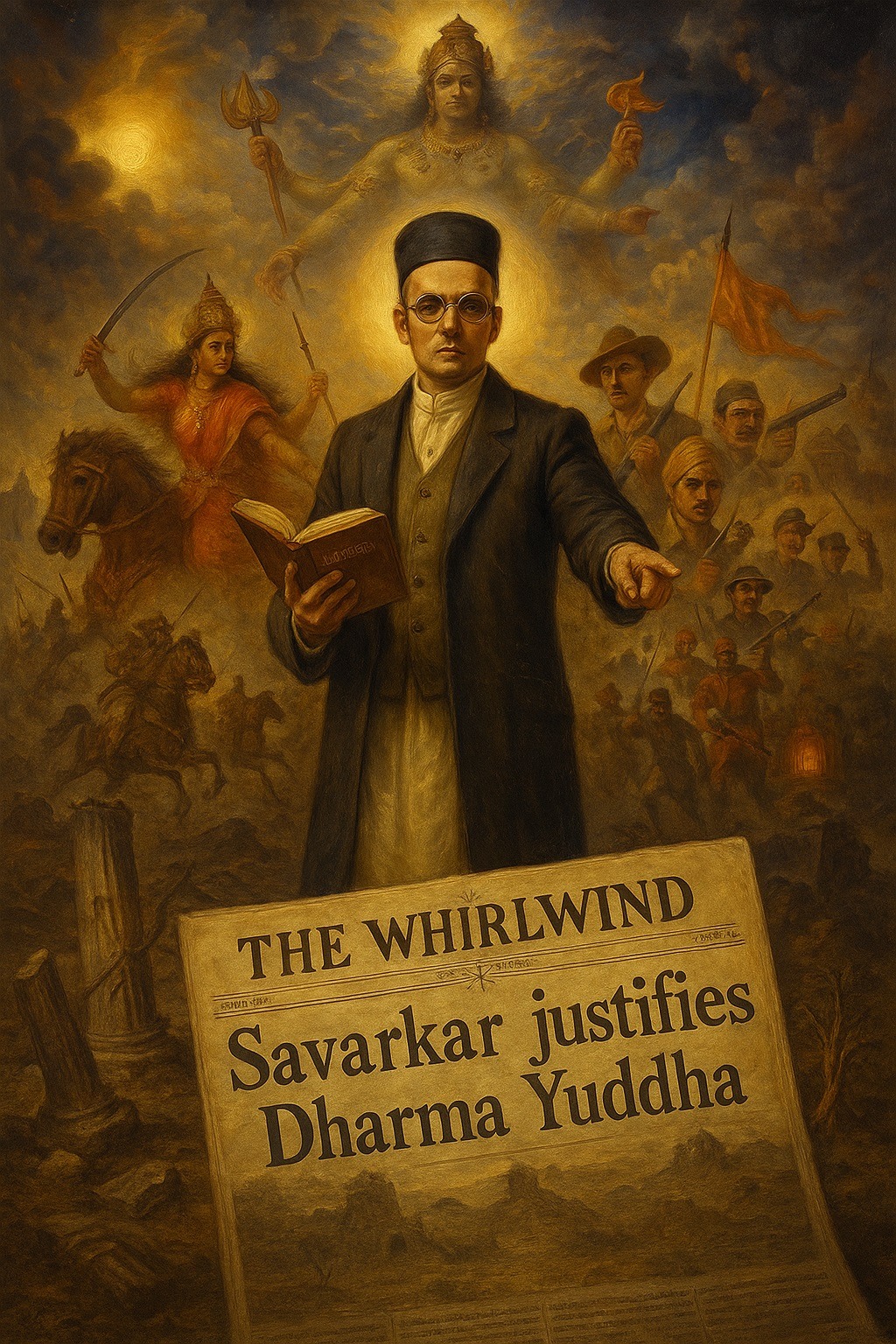
Political Dimension of Hindutva, Part 11 The idea of a “holy war,” known as Dharma Yuddha, against the enemies of Hindutva – particularly non-Hindu occupiers of the land – was a fundamental principle shaping Vinayak Damodar (Veer) Savarkar from his early youth. He derived this concept from the Bhagavad Gita, which speaks of the divine…
-

Political Dimension of Hindutva, Part 10 Vinayak Damodar (Veer) Savarkar, a pivotal figure in the Indian independence movement and a proponent of Hindutva, offered a unique and controversial vision of democracy and governance for post-colonial India. His ideas, as encapsulated in his first draft constitution, reflect his belief in an India dominated by a unified…
-

Religious Tradition and Political Struggle Traditional Roots of the Festival Anant Chaturdashi, observed on the 14th day of the bright fortnight of Bhadrapada (August–September), is one of India’s important Hindu festivals. Traditionally dedicated to Lord Vishnu as the infinite (Anant) sustainer of the universe, it revolves around the tying of the sacred Anant Sutra –…
-
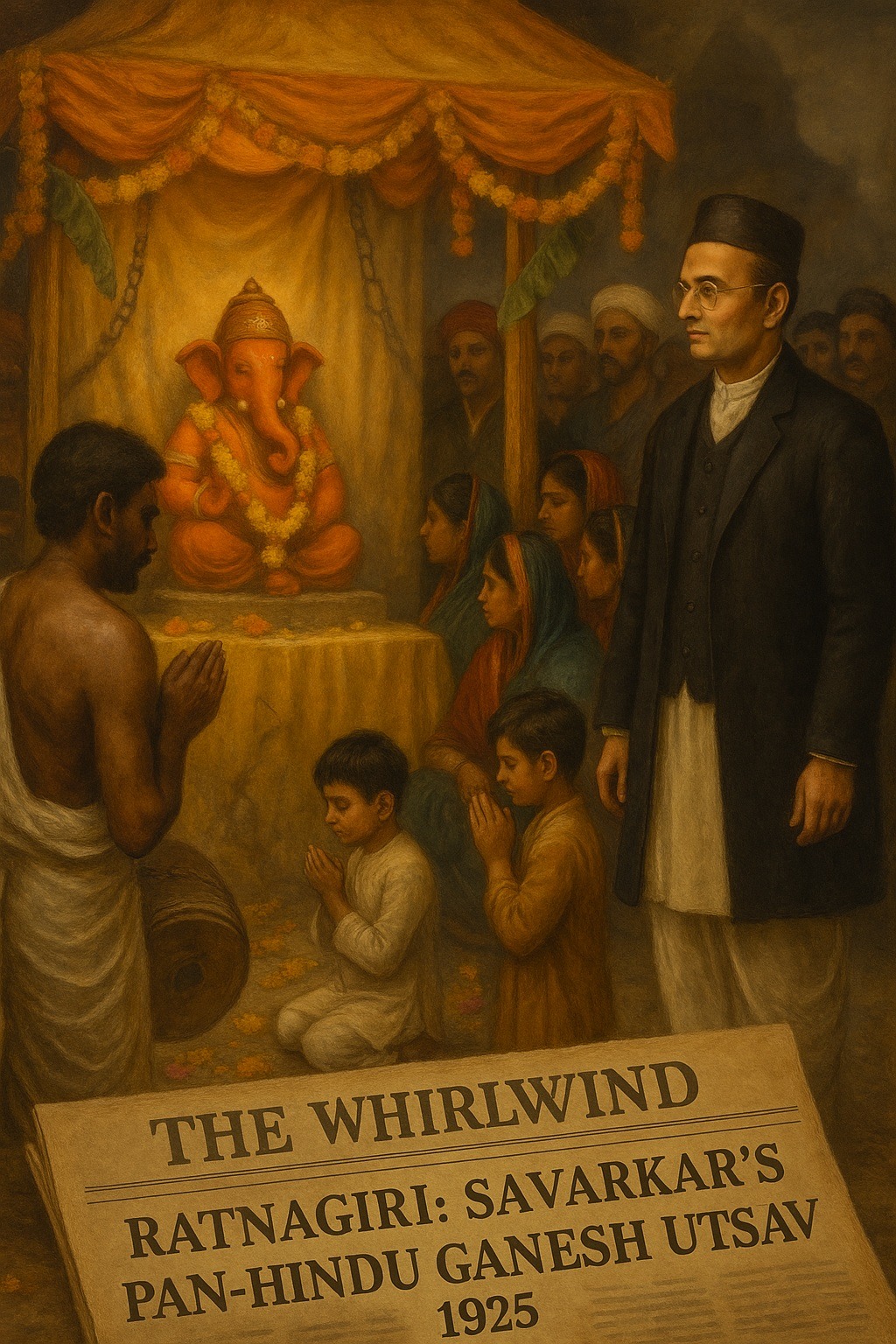
When we think of Ganesh Chaturthi (Ganeshotsava), the name of Bal Gangadhar (Lokmanya) Tilak often comes first. In the 1890s, Tilak had transformed a private household ritual into a public celebration — a powerful tool for awakening nationalist spirit and resisting colonial rule. But three decades later, in 1925, another revolutionary, Vinayak Damodar Savarkar (Veer…
-
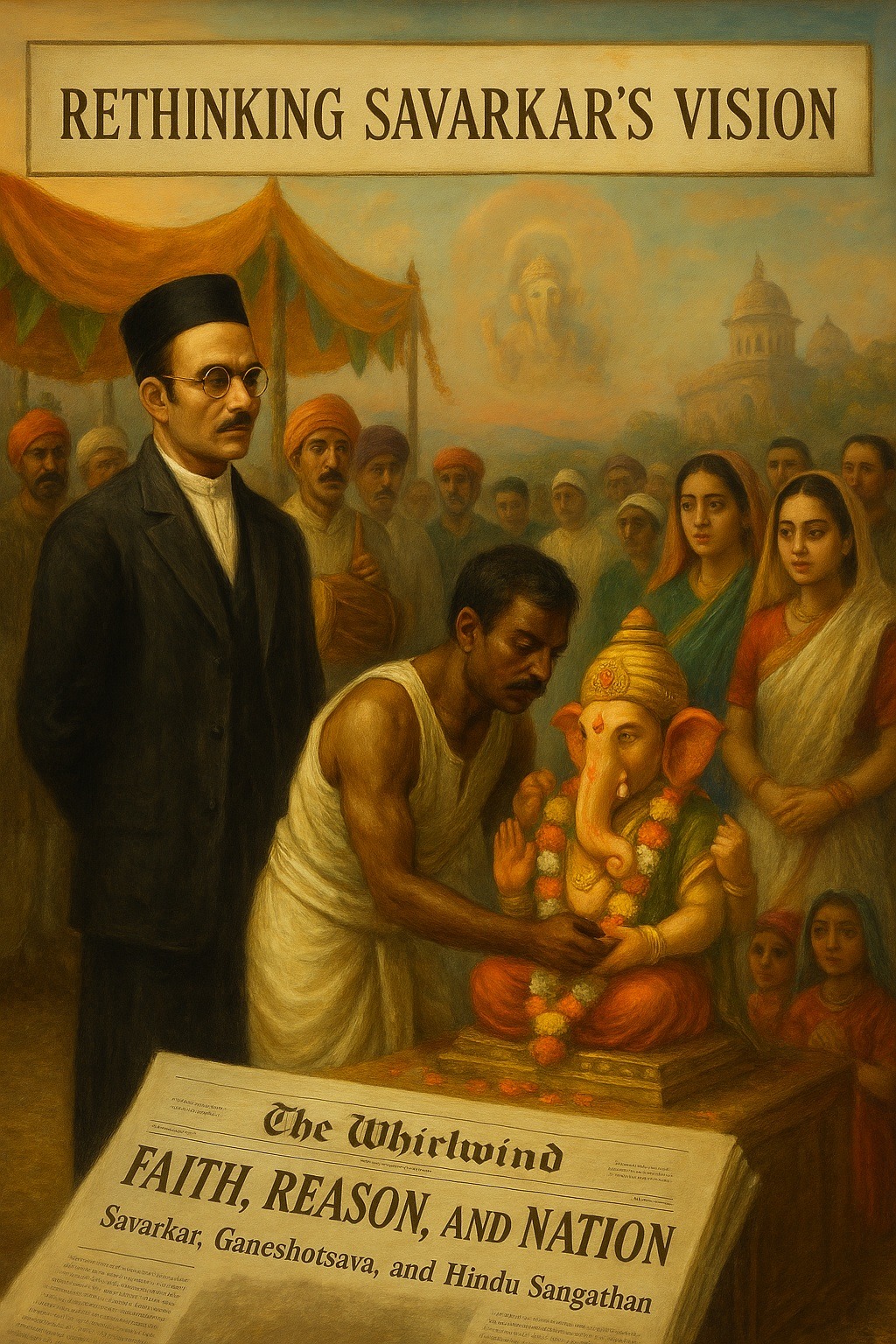
When we think of the modern Ganesh Chaturthi festival (Ganeshotsava), one name inevitably comes to mind: Bal Gangadhar (Lokmanya) Tilak, who in the 1890s transformed it from a private household ritual into a public celebration of unity and resistance against colonial rule. But what about Vinayak Damodar (Veer) Savarkar? Despite organizing a Pan-Hindu Ganesh Utsav…
-
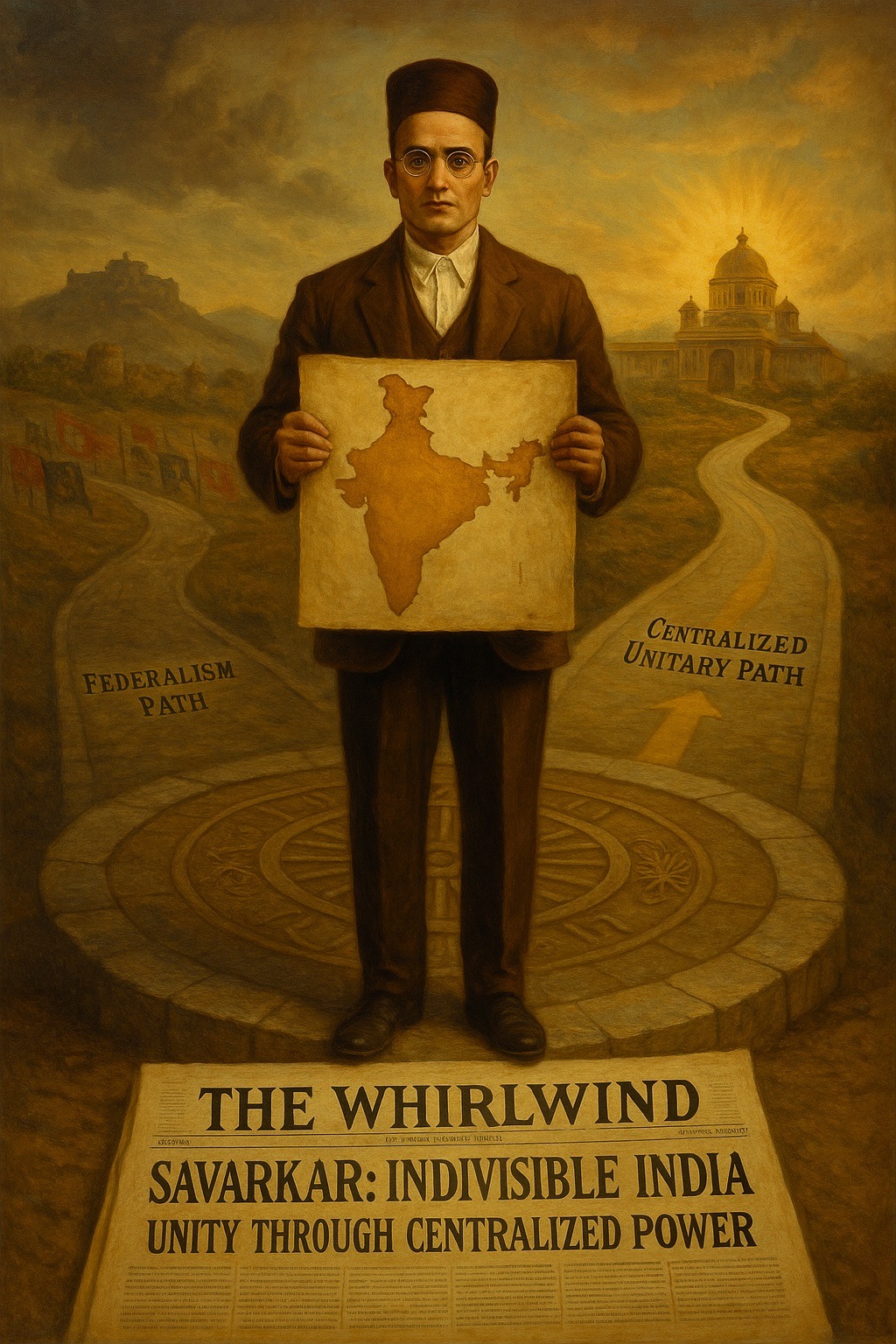
Political Dimension of Hindutva, Part 9 In Vinayak Damodar (Veer) Savarkar’s view, the challenge of preventing particularistic interests has been one of the most significant hurdles both in the struggle for independence and in shaping the post-colonial Indian state. Movements like the Andhra Movement or the alignment of Bengal’s independence struggle with regional interests highlight…
-
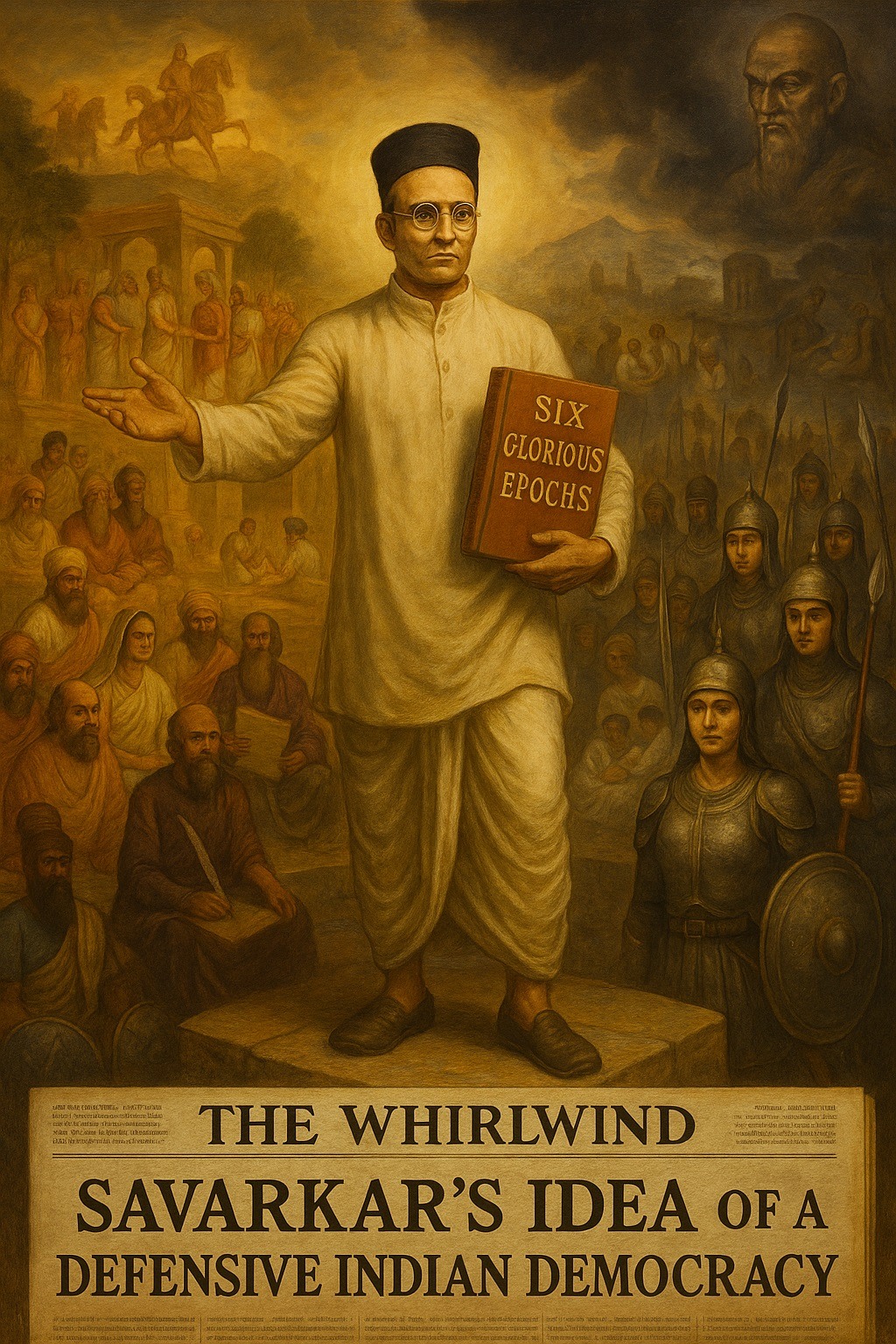
Political Dimension of Hindutva, Part 8 The political ideas of Vinayak (Veer) Damodar Savarkar cannot be clearly assigned to a specific model of governance. However, with the transformation of British India into the independent Indian Union, democratic concepts increasingly became the focus of his thinking. In his final work, Six Glorious Epochs of Indian History,…