
All Blogs
Discover
The Whirlwind’s Archive
This section contains the complete archive of The Whirlwind is a blog dedicated to the life, thought, and influence of Vinayak Damodar Savarkar. Each entry explores aspects of his political action, philosophical thinking, social reform efforts, historical interpretations, and cultural legacy. The blog aims to offer critical insights into Savarkar’s role in shaping modern Indian political and ideological discourse.

-
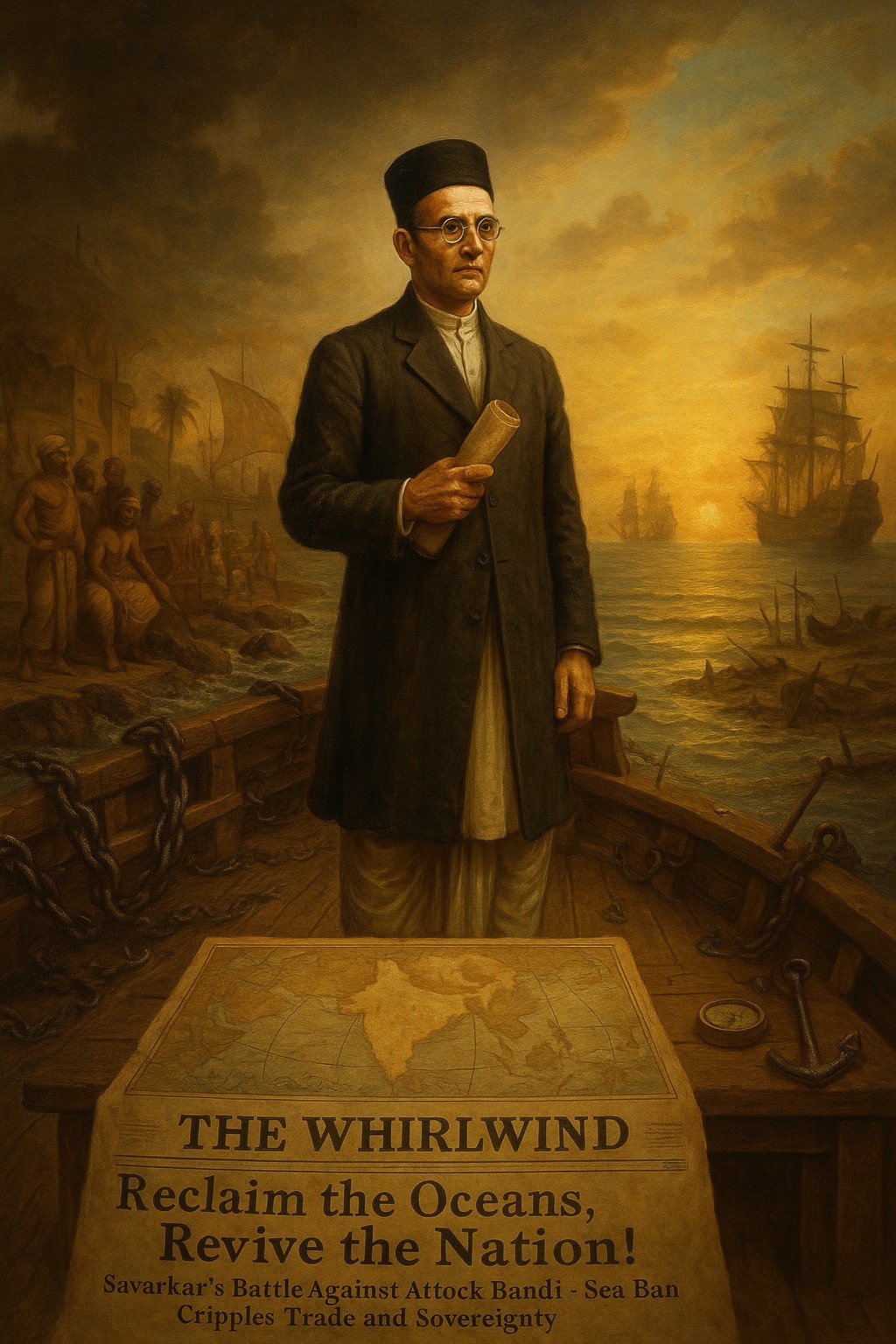
Savarkar and the Sea Travel Ban (2)
Read more: Savarkar and the Sea Travel Ban (2)Reform, Resistance, and Ideological Challenges Vinayak Damodar (Veer) Savarkar remains a fascinating and often polarizing figure in Indian history. As we discussed earlier (Part 1), his involvement in the debate surrounding the sea travel ban (Attock Bandi) reveals both his reformist zeal and the challenges he faced in balancing tradition with modernity. While his stance…
-
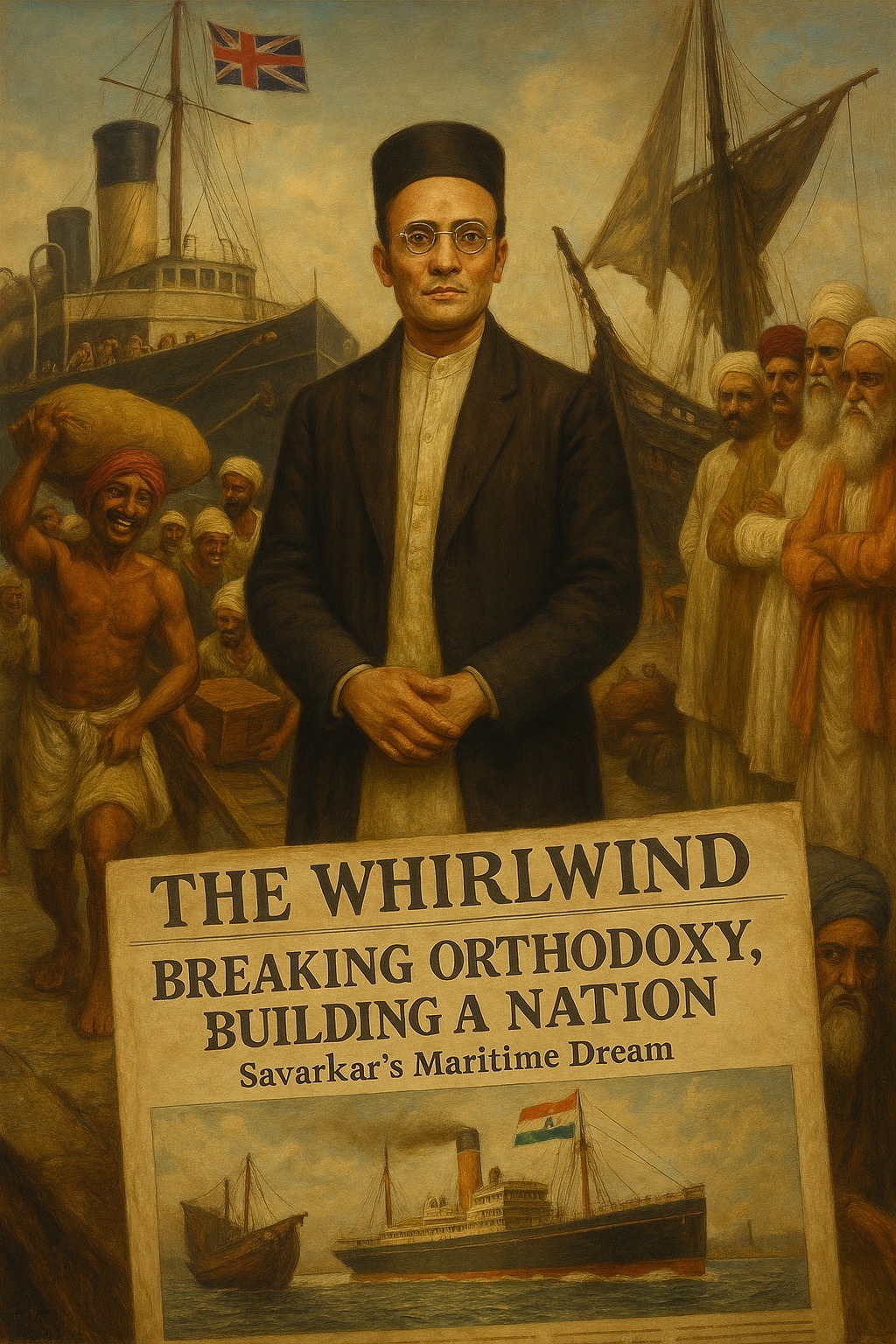
Savarkar and the Sea Travel Ban
Read more: Savarkar and the Sea Travel BanPart 1, A Historical Perspective Introduction In the late 19th century, the question of sea travel—particularly the ban on crossing the seas—became a significant social issue in India. This prohibition, known as Attock Bandi or Sindhu Bandi, was not only a religious and social restriction but also one that severely hindered the political, economic, and…
-
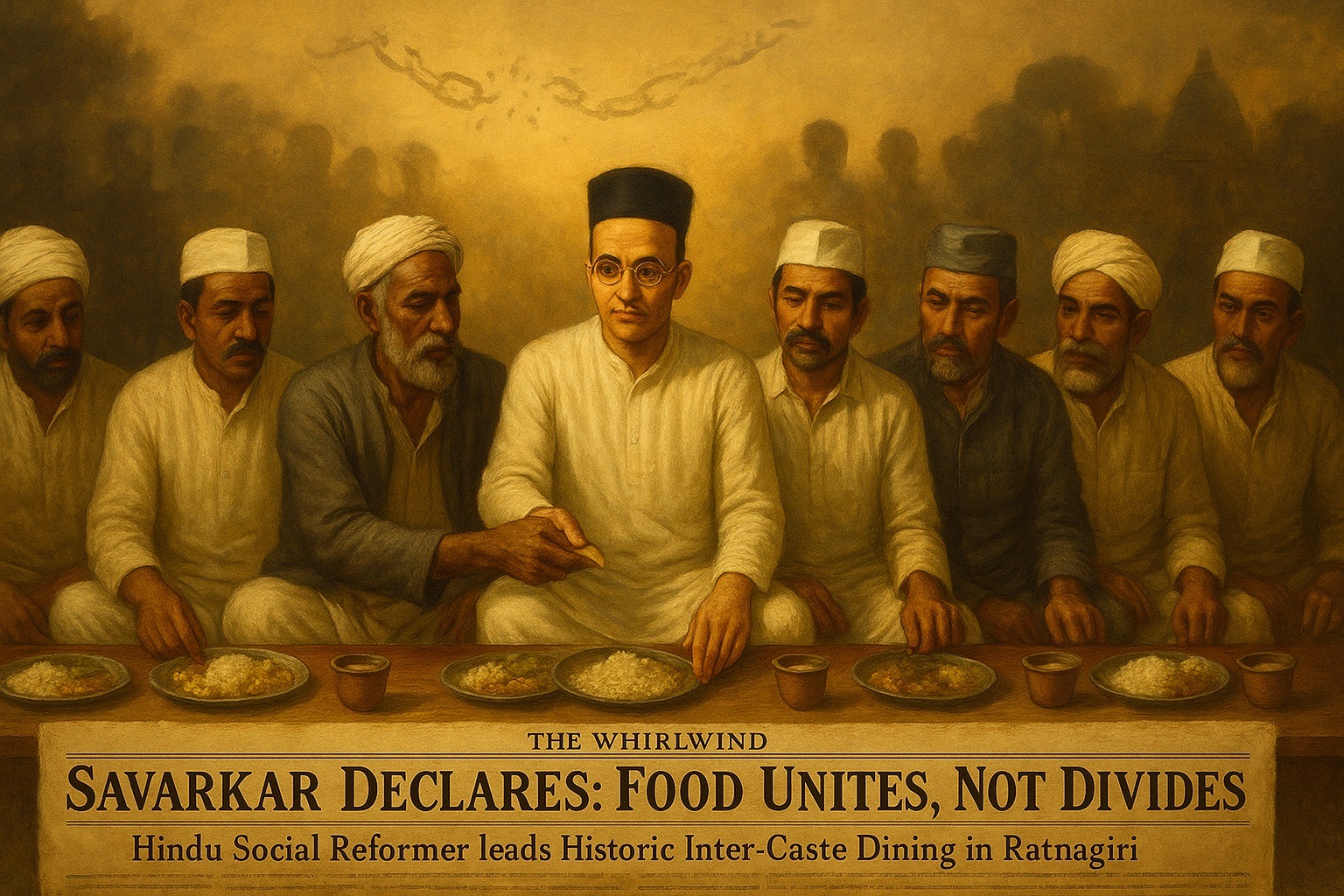
Savarkar’s Sahbhoj Movement
Read more: Savarkar’s Sahbhoj MovementIn the battle to eliminate social evils, Vinayak Damodar Savarkar viewed the institution of community eating—or inter-caste dining—as a powerful weapon. This reform was seen by him as essential for dismantling the deeply entrenched barriers of the caste system and addressing the discrimination faced by Untouchables in Hindu society. The caste system, with its rigid…
-

Savarkar and the Open-Home Movement
Read more: Savarkar and the Open-Home MovementIn the deeply stratified caste-based society of India, untouchability was more than a social stigma—it was a form of systemic exclusion that dictated every interaction between communities. One of the most visible and personal manifestations of this discrimination was the denial of access to private homes. For centuries, Untouchables were not allowed to step into…
-

Savarkar: Burning Manusmriti, Fighting Untouchability
Read more: Savarkar: Burning Manusmriti, Fighting UntouchabilityThe fight against untouchability has been a cornerstone of India’s social and political reform movements, and one of the most significant contributors to this cause was Vinayak Damodar (Veer) Savarkar. Among the most symbolic actions taken by him in this struggle was the public burning of the Manusmriti, an event that not only captured public…
-

Phadke’s Legacy and Savarkar’s Inspiration
Read more: Phadke’s Legacy and Savarkar’s InspirationToday marks the birth anniversary (4 November 1845) of Vasudev Balwant Phadke, one of the pioneering figures who inaugurated the revolutionary era during British rule in India. Phadke raised a fighting force of about three hundred determined young men and waged a campaign of resistance against the colonial occupiers. At the heart of his struggle…
-

Savarkar and the Patit-Pawana Temple
Read more: Savarkar and the Patit-Pawana TempleOne of Vinayak Damodar (Veer) Savarkar’s most significant contributions to social reform in India was his active fight against the deeply ingrained practice of untouchability. Besides Savarkar’s Vitthal Temple Entry Movement, another remarkable milestone in this campaign was the founding of the Patit-Pawana-Mandir (Temple of the Redeemed) in Ratnagiri, a powerful symbol of inclusion and…
-

Savarkar’s Vision of Economic Nationalism
Read more: Savarkar’s Vision of Economic NationalismEconomic Dimension of Hindutva, Part 11; Savarkar’s Economic Principles (7/13) Introduction: Economic Development as a Pillar of National Progress Economic development has always stood at the heart of national progress, shaping the strength and sovereignty of a nation. Among the many debates surrounding economic strategy, one of the most enduring concerns the role of the…
-

Savarkar and India’s Language Question
Read more: Savarkar and India’s Language QuestionWhen Vinayak Damodar (Veer) Savarkar reflected on what holds a nation together, he looked beyond geography or race. For him, true national unity demanded not only shared ideals but also a shared language (a Rashtrabhasha) — a medium through which those ideals could live, circulate, and bind people together. Savarkar viewed communication as the ‘lifeblood…
-
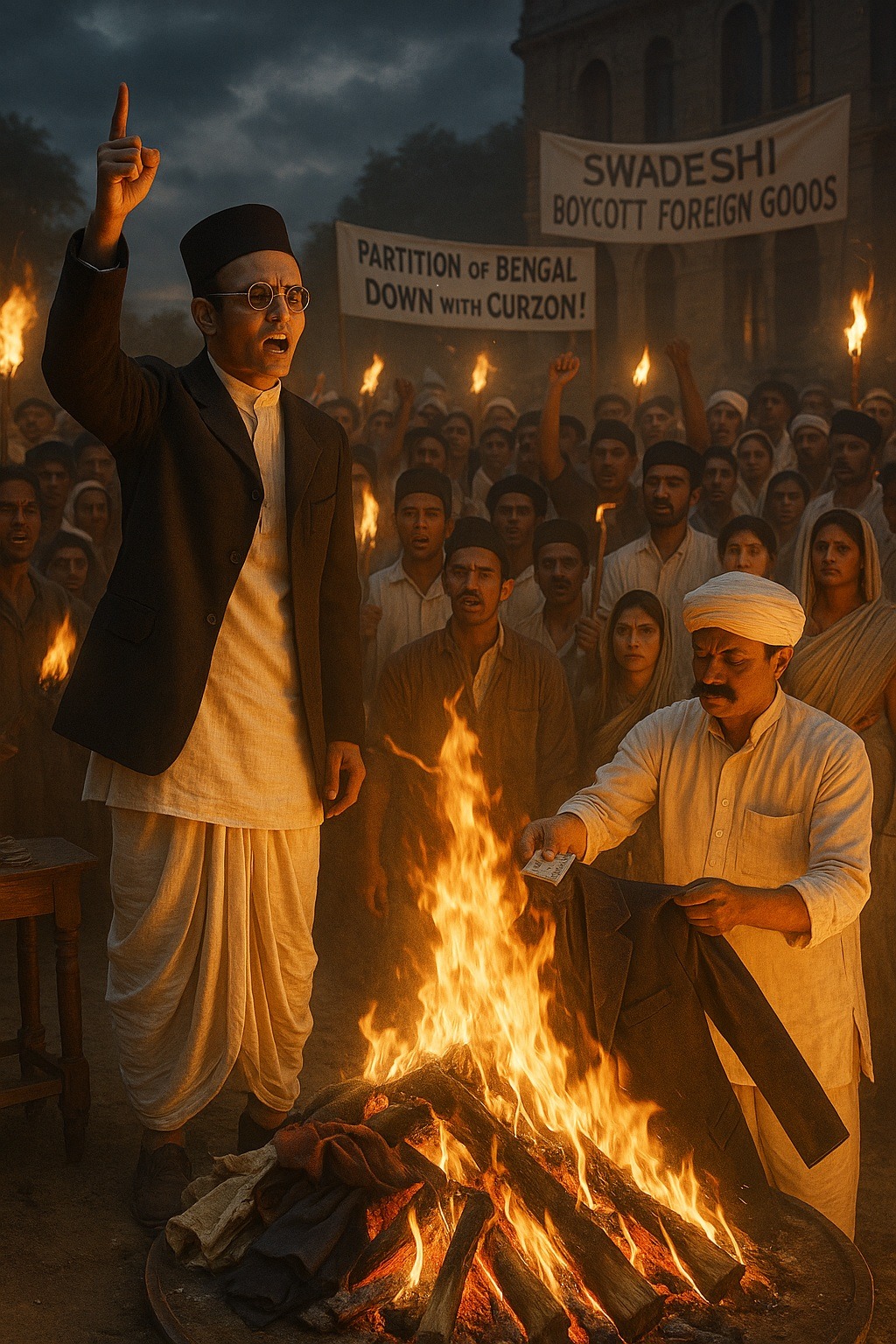
Public Bonfire: It was Savarkar, Not Gandhi!
Read more: Public Bonfire: It was Savarkar, Not Gandhi!In the history of India’s Swadeshi movement, it was Vinayak Damodar (Veer) Savarkar, not ‘Mahatma’ Gandhi, who first organized a public bonfire of foreign goods. A fact which gets often sidelined or ignored by ‘biased INC’ historians. In 1905, when he was in his early twenties, Vinayak Damodar (Veer) Savarkar became a passionate student leader…